

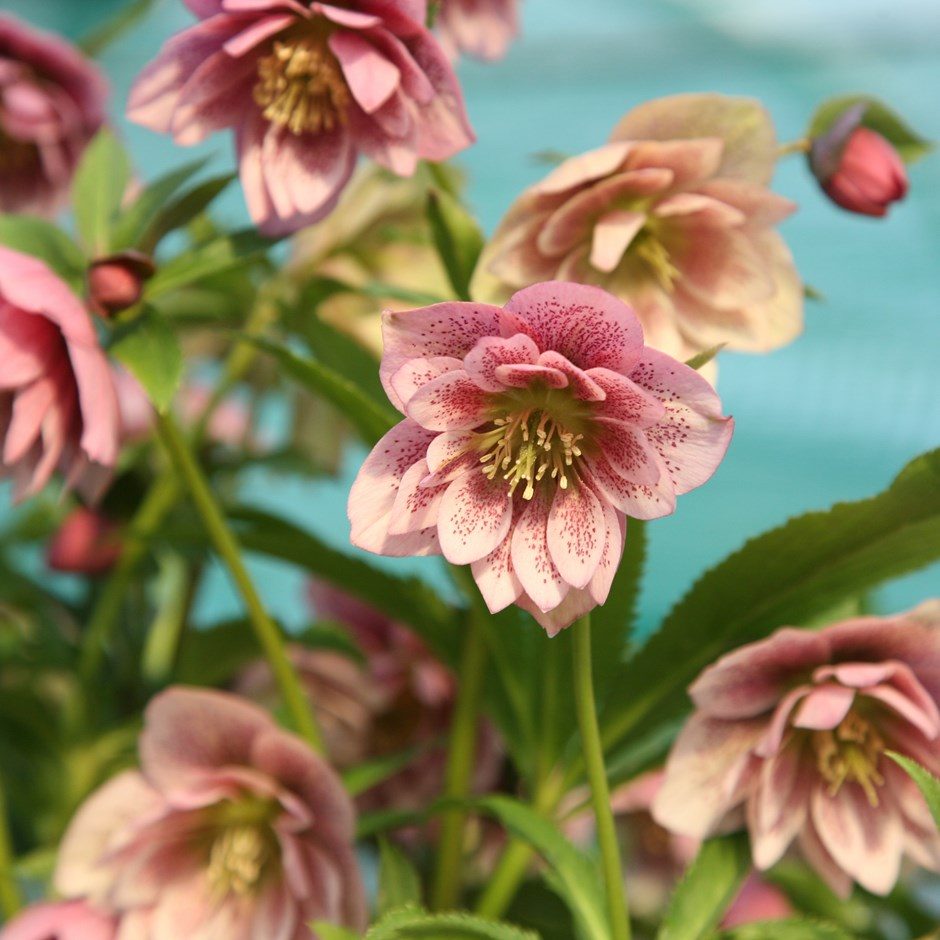
We’re about to drop some knowledge. Are you ready to catch it?
Many of us select plants for our landscapes based on how they look. Though it’s natural for us to enjoy beautiful blossoms, hues, and textures, we also need to think about how the plant material we choose interacts with its ecosystem. Will it nourish local pollinators and bring harmony? Will it grow aggressively and crowd out other plants? Plants that are splashy and bright may look amazing, but if they are not native to the area, they are actually doing our earth some harm. Yikes!

This may seem like a no-brainer, but plants and the creatures that depend on them evolve together. Non-native and hybridized plants (read about hybrids in our blog) aren’t what our local critters are accustomed to. When a nonnative plant is established in a landscape, the species that would normally consume it or shelter in it don’t actually recognize it.
This results in struggling populations and other imbalances in an otherwise perfectly designed ecosystem. Some of our collective choices as gardeners and homeowners have been throwing balance right out of the window, but we always have the opportunity to get back on track.
The more we learn about how plants behave in different environments, the better we can be stewards of the earth and make decisions that bring abundance to our neighborhood. Choosing native plants (or having at least 50-70% of your plants be natives) for our gardens is an easy way to contribute to a happy, healthy ecosystem.

The white oak (Quercus alba) is another great example of a keystone species. These wise and generous trees support more life-forms than any other tree in North America. 2,300 wildlife species of fungi, insects, birds and mammals find nourishment and shelter in their roots, branches and leaves.
In Doug Tallamy’s book, The Nature of Oaks, he describes a study of an oak tree in his backyard. He discovered that a single oak sustains 897 species of caterpillars, which are the main food source for nesting birds. Through these studies, we have been learning about how important it is to consider nature and the food web, and how much our choices impact our ecosystem. Choosing plant material for our gardens solely for their ornamental value is ignoring how our earth works. Instead, consider opting for something that attracts the eye and has high ecological value.
Non-Native Plants
Throughout history, people have traveled to new lands and found new and exciting plants. They’d bring these non-native plants back home and plant them, evidently unaware that this was an unnatural and sometimes dangerous way to garden. These foreign plants were doing very well where they were originally, and weren’t supposed to be moved. They go from being a natural part of their ecosystem that has built-in checks and balances to a new environment, where they can easily take over an area or alter it in some other way.
What is a Native Plant?
Great question! A plant is considered native if it occurs naturally in a particular region, ecosystem, or habitat, rather than being introduced by humans. Local (A.K.A. native) pollinators and critters depend on native plants for food, water, habitat, and overall balance. Wildlife easily recognizes native plants as accessible resources. When we incorporate native plants in our gardens, they require less maintenance because they have the innate ability to thrive in their native environment. Rather than needing to be watered and fertilized often, they just need you to keep an eye out for weeding every now and then.
Plants and neighboring creatures are in a symbiotic relationship, just like Nemo and his sea anemone home. When people make choices to develop wild spaces without prioritizing keystone species, they are affecting the landscape negatively.
What the Heck Are Keystone Species?
These are organisms native to any given area that help hold the ecosystem together. They have a lot of responsibility. Keystone species feed and house a large portion of the populations around them and keep everything in balance. They play a critical role in maintaining the structure of their ecological community. Being a keystone also may mean they are a host plant, meaning that they are the only – or one of the only – plants that provide food, habitat, and breeding sites for certain species. For a Monarch butterfly, the milkweed plant is vital for laying eggs and feeding the larvae. If there is no milkweed, there are no Monarchs or other moths, beetles, or bugs that depend on milkweed. Cheers to this plant; a keystone species and host plant for several organisms (the crowd goes wild!).
An example of a non-native that brought a lack of balance to the Eastern US is the Autumn olive (Elaeagnus umbellata); pictured on left. This deciduous shrub was brought over in 1830, expected to be an ornamental plant that could provide habitat and food to local wildlife. It was also used by soil conservation services as erosion control. Since the autumn olive didn’t have any natural predators or munchers to keep it in check in its new environment, it spread uncontrollably. Invasive plants crowd out native plants and make local populations vulnerable. Read more about invasive plants in our blog post.
Sometimes, non-native plants can fit into an area just fine, if they are kept in check. As you are making decisions about what to plant in your landscapes, ask yourself: “Will this plant add to balance in my neighborhood?” If you have fallen in love with a non-native plant but know that it won’t fit in well with your garden, you can look at its characteristics (like color, shape, or texture) and then see if there is a native version of it that is more recognizable and accessible to our local creatures.
For example, try opting for a wild geranium and a hybrid (pictured on right). Wild Geranium (Geranium maculatum) is a host plant (meaning it’s a native!) to twenty-five species of Michigan moths and butterflies. My goodness! Geranium Rozanne is a gorgeous purple hybrid known for its strong bloom power. If you choose both, then you’re taking the opportunity to keep those native species part of our ecosystem while also getting to enjoy the beauty of other species.
Whew…that was a lot of info to digest. Thank you for sticking with us and continuing to learn about the world of plants. As we gain understanding of the importance of native and keystone species, it helps us appreciate the value they bring to our environments!
Until next thyme,
My Thyme Gardens
All photos by Jen Ott